
AI ERP for state-owned companies and the public sector: how Portos Rio will integrate its management in 12 modules
Portos Rio, the Port Authority, has started implementing CITSmart ERP with Central IT. Twelve integrated modules replace all of its current systems, from procurement to payroll, orchestrated by CITSmart Hyper Agents, Central IT's AI engine.
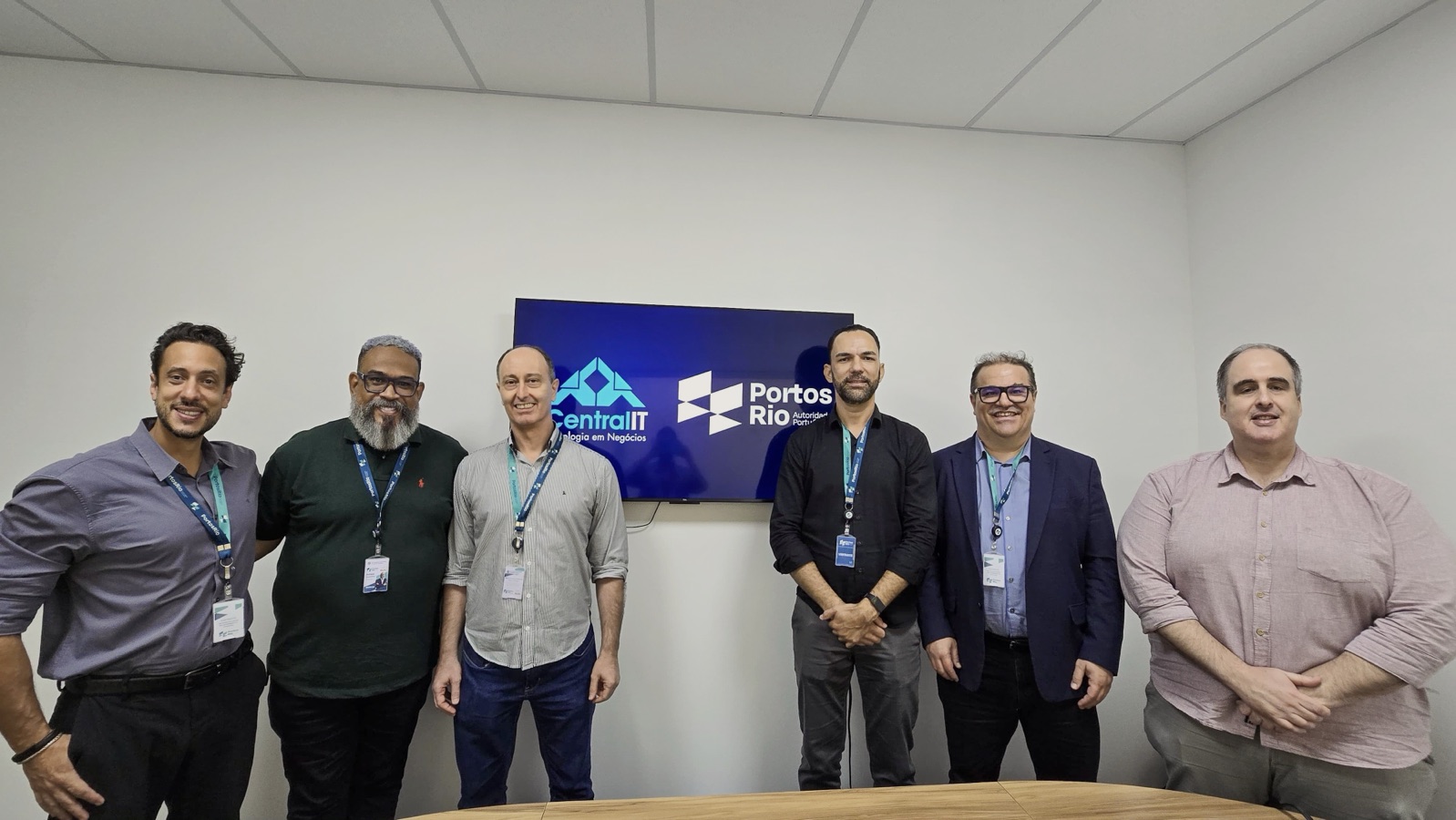
What Portos Rio will implement
Portos Rio is the Port Authority for the organized ports of the state of Rio de Janeiro. As in many public organizations, its administrative management was spread across different systems, each one handling a single area. The project with Central IT replaces that set with one ERP: CITSmart ERP, with 12 modules working on the same database.
The kickoff took place on October 14, 2026, with teams from both companies. From there, the modules go live in waves until all the current systems have been replaced.
The 12 CITSmart ERP modules at Portos Rio
The scope covers the areas that support the operation of a state-owned company, from supplier records to payroll, plus the integration, BI, and Low Code layers that connect and adjust all of it.
Master Data
A single base of individuals and companies, validated at the source.
Administration
Administrative routines in the same flow as the other areas.
Procurement and Inventory
From the purchase request to the warehouse, with physical and financial control.
Fixed Assets
Asset registration, transfers, depreciation, disposal, and inventory.
Finance
Accounts payable and receivable, payment scheduling, and bank reconciliation.
Accounting and Budget
Entries generated automatically from operations, with an audit trail.
Payroll and HR
Payroll, time tracking, and obligations such as eSocial generated from the same database.
Legal
Cases, deadlines, and contingencies tracked in the same system.
Projects
Scope, schedule, team, and cost per project.
Integrations
APIs and Web Services to connect with internal and external systems.
BI
Dashboards and indicators built on data from every area.
Low Code
Screens, rules, and workflows adjusted without a long development project.
Why replace several systems with one integrated ERP
When each area has its own system, the same data is typed in more than once, one area's numbers don't match another's, and closing the month or answering an audit turns into reconciliation work. In an integrated ERP, data is entered once and flows through the whole process: a purchase recorded in Procurement reaches inventory, finance, and accounting without being retyped.
- One source of truth. Contracts, resources, and finances read from the same database, with no mismatch between areas.
- Traceability. Any entry can be traced back to the transaction that created it, with a log of who did what.
- Less rework. The time spent reconciling spreadsheets and systems goes back to management.
- One accountable vendor. Support, evolution, and integration with a single point of contact.
If your organization is still deciding whether it needs an ERP, it is worth reading what ERP is and when it is worth implementing one first.
The role of AI: CITSmart Hyper Agents orchestrating the ERP
What sets this project apart from an ordinary system replacement is the AI layer. At Portos Rio, all CITSmart ERP modules are orchestrated by CITSmart Hyper Agents. Integrated with the ERP, Hyper Agents will be the engine for transforming Portos Rio's management and operational processes.
In practice, the AI works inside the ERP, in the context of what the user is doing, and not in a separate chat window:
- Tasks in natural language. The user asks in plain text, and the system runs the routine.
- Answers based on current data. Questions about balances, contracts, or budget commitments answered on the spot.
- Automated routines. Finance and procurement entries, lookups, and workflows with no manual intervention.
- It acts, not just chats. The AI takes action in the ERP, instead of returning text for someone to type in again.
How the implementation works: waves of six stages
Replacing every system at once is the quickest way to bring operations to a halt. That is why the implementation runs in waves: one group of modules at a time, and each wave goes through the same six stages.
01Discovery
Each area's processes are mapped on site, with the key users.
02Configuration
The ERP is configured to the organization's rules, approval levels, and workflows.
03Migration
Data from the current systems is imported, cleaned, and reconciled.
04User acceptance testing
The user areas test the configured system, also on site.
05Training
Managers and teams learn the workflows and dashboards before the cutover.
06Go-live
The wave goes live, with support for the operation until acceptance.
Two choices in the project weigh on the outcome. Discovery and testing are done on site, side by side with the user areas and key users, because that is where the rules no document records come to light. And after the cutover, the Central IT team supports the operation for 90 days until acceptance, so the first payroll, the first month-end close, and the first purchase in the new system are not left to the Portos Rio team alone.
What to evaluate in an ERP for state-owned companies and the public sector
A public sector ERP is not chosen by its list of modules alone. These are the points that usually separate a system that fits from one that turns into an endless customization project:
- Compliance out of the box. Lei 14.133/2021 (the Brazilian public procurement law), Lei 13.303/2016 (the Brazilian state-owned companies law), PCASP (the public sector chart of accounts), eSocial, and EFD-Reinf (the federal tax withholding report) handled by the system itself, not by a spreadsheet on the side.
- Audit trail. A log of user activity and the path of any transaction back to its source, for internal control and the Court of Accounts.
- Integration with what already exists. APIs and Web Services to connect with systems that stay in place, with transparency portals, and with federal registries.
- 100% web-based, with data in Brazil. Access through the browser, with nothing to install, and hosting in a data center in the country.
- Adjustments without a long project. Low Code to change rules, screens, and workflows when legislation or operations change.
- An implementation that doesn't stop operations. Waves, testing with the people who use the system, and support after the cutover.
Frequently asked questions
What is an ERP for a public or state-owned company?
It is an integrated management system that brings a public organization's administrative areas together in a single database: procurement, inventory, fixed assets, finance, accounting, budget, payroll, legal, and projects. What sets it apart from a commercial ERP are the rules it must meet out of the box, such as Lei 14.133/2021 (the Brazilian public procurement law), Lei 13.303/2016 (the Brazilian state-owned companies law), PCASP (the Brazilian public sector chart of accounts) in accounting, and obligations such as eSocial (the federal payroll and labor reporting system), with an audit trail for internal and external oversight.
Which CITSmart ERP modules will Portos Rio use?
Twelve integrated modules: Master Data, Administration, Procurement and Inventory, Fixed Assets, Finance, Accounting and Budget, Payroll and HR, Legal, Projects, Integrations, BI, and Low Code. They replace all the systems Portos Rio uses today.
How does a wave-based ERP implementation work?
The modules go live in groups, not all at once. Each wave goes through six stages: discovery, configuration, migration, user acceptance testing, training, and go-live. At Portos Rio, discovery and testing are done on site, with the user areas and key users, and after the cutover the Central IT team supports the operation for 90 days until acceptance.
What does CITSmart Hyper Agents do inside the ERP?
Hyper Agents is Central IT's AI engine. At Portos Rio, it orchestrates all CITSmart ERP modules and will be the engine for transforming management and operational processes. In the ERP, the AI works inside the system, in the context of what the user is doing: it carries out tasks requested in natural language, answers questions about balances, contracts, or budget commitments with current data, and automates finance and procurement routines.
Where is CITSmart ERP data stored?
CITSmart ERP is 100% web-based and runs in the cloud, in a Tier III data center, with data stored in Brazil. Access is through the browser, with nothing to install on the user's machine.
Thank you, Portos Rio, for your trust. Technology in Business at the service of the Ports of Rio.
Discover CITSmart ERP
Integrated management for the public sector and state-owned companies, with AI inside the system and an implementation that doesn't stop operations.